Archive
UK Economy – how can it improve?
Javier Milei, the recently elected libertarian president of Argentina, promotes principles rooted in economic liberalism, including reduced government intervention, deregulation, free markets, and fiscal discipline. While the UK’s context differs significantly from Argentina’s—both politically and economically—the Conservative Party could draw inspiration from Milei’s principles to address challenges in the UK economy. Here are potential applications:
1. Reducing Government Size and Spending
Milei’s Approach: Advocates for a drastic reduction in government size and bureaucracy to curb excessive spending.
UK Application:
Streamline public services to reduce waste and inefficiency.
Target welfare reform by focusing on incentivizing work rather than long-term dependency.
Privatize or outsource underperforming government-owned entities.
2. Tax Reform and Deregulation
Milei’s Approach: Supports lower taxes to encourage investment and stimulate economic growth.
UK Application:
Simplify the tax system to make it more competitive globally, particularly for businesses.
Reduce regulatory barriers for small and medium enterprises (SMEs) to foster entrepreneurship and innovation.
3. Monetary Policy Reforms
Milei’s Approach: Proposes dollarization in Argentina to stabilize the economy.
UK Application:
While dollarization isn’t relevant for the UK, maintaining strict monetary discipline by supporting Bank of England independence and ensuring inflation targets are met is key.
Introduce incentives for saving and investment to counter inflationary pressures.
4. Free Trade and Market Liberalization
Milei’s Approach: A staunch advocate for free trade and competition.
UK Application:
Expand trade agreements post-Brexit to open up new markets.
Reduce tariffs and trade barriers to boost exports.
Continue to create more Freeport zones to attract foreign direct investment (FDI).
5. Decentralization
Milei’s Approach: Promotes decentralizing power to reduce corruption and inefficiency.
UK Application:
Empower local governments to manage budgets and drive regional growth.
Enhance regional investment strategies to reduce the economic gap between London and other areas.
Challenges to Consider
Political Culture: The UK has a robust welfare state and public expectation of government support, which might resist drastic reforms.
Economic Stability: The UK does not face the hyperinflation and economic instability of Argentina, so applying Milei’s principles requires adaptation to avoid unintended consequences.
Public Opinion: Radical libertarian policies may not align with voter expectations in a mixed economy like the UK.
By adapting these principles selectively and within the UK’s unique socio-political context, the Conservative Party could leverage Milei-inspired reforms to reinvigorate economic growth, foster innovation, and solidify their position as stewards of fiscal responsibility.
#UKEconomy#Argentianmodel
Failings in National Health Service
Failings in Strategic Leadership and Day-to-Day Management of the National Health Service
The National Health Service (NHS) is a cornerstone of public healthcare in the UK, celebrated for its commitment to providing care to all, regardless of income. However, it faces significant challenges rooted in both strategic leadership and day-to-day management. These failings not only undermine the efficiency and effectiveness of the NHS but also erode public trust and compromise patient care. This article explores the critical areas where these challenges are most clear and proposes pathways for reform.
1. Strategic Leadership Failings
Lack of Long-Term Vision
Critics charge that NHS strategic leaders overemphasize short-term goals while neglecting long-term, systemic problems. An aging population, rising chronic diseases, and rapid healthcare technological advancements cause proactive policymaking. Despite this, leaders prioritize immediate solutions, overlooking fundamental problems.
Policy Instability
Frequent changes in healthcare policy, coupled with continuous restructuring, disrupt the stability of the NHS. These shifts create uncertainty for staff and patients alike, making it difficult to establish and maintain effective practices. Consistent policy-making is essential to building trust and operational efficiency.
Underfunding and Resource Allocation
Insufficient funding and mismanagement of resources continue to hinder effective strategic leadership. The NHS faces huge financial strain, and prioritizing some services over others has left vital areas like mental health and prevention under-funded and struggling to cope.
Workforce Planning
One of the most obvious strategic failures is ineffective workforce planning. Chronic shortages of doctors, nurses, and support staff stem from insufficient recruitment, retention, and training. Existing staff face heavier workloads, thus impacting patient care quality.
Fragmented Decision-Making
Leadership frequently works in isolation, resulting in disjointed strategies that don’t account for the interconnectedness of NHS functions. For example, frontline staff often face inefficiencies and frustration because of policy decisions that ignore operational realities.
2. Day-to-Day Management Failings
Inefficient Operations
Bureaucratic processes and out-dated systems hamper timely decisions and efficient patient flow. The consequence of this inefficiency is longer wait times, delayed treatments, and frustration for everyone involved. Streamlining administration will improve operational efficiency.
Burnout and Staff Wellbeing
The NHS’s greatest asset is its workforce, yet inadequate support for staff has led to widespread burnout, absenteeism, and high turnover rates. The overwork and under appreciation of frontline workers diminishes morale, thereby diminishing the quality of patient care.
Digital Infrastructure
The NHS has struggled to implement and integrate modern digital systems effectively. Poorly functioning electronic health records, lack of interoperability between systems, and insufficient cyber security measures are significant barriers to operational efficiency and data management.
Inadequate Communication
Failures in clear and consistent communication within and between departments exacerbate resource mismanagement and impact patient outcomes. Effective communication ensures efficient resource use and keeps staff well informed about organizational goals and strategies.
Patient Safety Concerns
Operational failings often translate into patient safety risks. A shortage of staff and resources, combined with ignoring safety procedures, is causing more medical errors and patients are less satisfied.
3. Cultural Issues
Top-Down Approach
The perception of NHS leadership is that it’s distant from frontline experience. A top-down approach alienates staff and diminishes engagement; many feel unheard and unvalued.
Blame Culture
A pervasive blame culture discourages staff from reporting problems or proposing innovative solutions. This stifles learning and improvement, perpetuating systemic issues rather than addressing their root causes.
Resistance to Change
Leadership and operations staff frequently resists needed reforms due to uncertainty, lack of comprehension, or established routines. Modernizing and improving the NHS’s functionality requires overcoming this resistance.
4. Public Accountability and Transparency
Limited Public Engagement
The NHS has faced challenges in effectively engaging the public in its decision-making. Programs and plans often fall short because of insufficient community engagement by leadership.
Opaque Decision-Making
A lack of transparencies in budgeting, target-setting, and performance evaluations undermines public trust. Clear and open communication about decisions and their rationale is vital to maintaining confidence in the NHS.
Addressing the Issues
Reforming the NHS requires a comprehensive approach that addresses both strategic leadership and operational management.
Key recommendations include:
Developing a Long-Term Vision:
- Leadership must focus on sustainable, long-term strategies that address demographic shifts, technological advancements, and workforce needs.
- Stabilizing Policies: Reducing the frequency of policy changes and ensuring consistency can help build trust and allow for more effective implementation of reforms.
- Investing in Workforce Development: Improving recruitment, retention, and training programs is essential to address staff shortages and enhance morale.
- Modernizing Digital Infrastructure: Investing in robust, interoperable digital systems will streamline operations and improve patient care.
- Fostering a Positive Workplace Culture: Moving away from a blame culture and adopting a more collaborative approach will empower staff and encourage innovation.
- Enhancing Public Engagement: Actively involving patients and the public in decision-making processes will ensure that the NHS remains aligned with the needs of the communities it serves.
- Improving Transparency: Clear and open communication about decisions, budgets, and outcomes will rebuild public trust and accountability.
By addressing these issues, the NHS can fulfil its mission of providing high-quality, equitable healthcare to all. Effective leadership and management are not just organizational imperatives; they are essential to the health and wellbeing of the nation.
#National Health Service #failings#solutions
Post Pandemic Britain – Poverty & Empowerment
Coronavirus has altered every part of our society, but for those on small incomes its impact is severe. Since the outbreak, many have lost their jobs or seen their hours cut.
Millions who were already struggling to remain afloat have been drawn deeper under. Others have been driven into poverty. Two million people applied for universal credit in the six weeks to 12 April – approximately five times greater than the same time last year1.
Lacking money to pay for good home, fresh meal and drink, warm clothes is the most conspicuous way poverty damages health but there are many more indirect ways mental status is undermined2. In 2016, the Mental Health Foundation presented a report3, which stressed that poverty reduces “mental bandwidth”, the capacity of brain to perform routine functions, the result of which is that poorer people make poorer health decisions.
According to Wisner et al4, poverty and inequality drive vulnerability, but even the vulnerable have some powers to grapple with setbacks. Strengthening these capacities, so long as they address needs and disaster risk in the long-term, and not only the short-term, can empower people to recover from setbacks. By enhancing resilience, families and community can also do well in the face of disasters, breaking the rhythm of disasters creating and being driven by poverty. Strengthening livelihoods and building resilience is thus crucial to cutting both disaster risk and hardship.
This issue of inequalities being raised is also being examined through an increasing pressure on Britain’s food banks, as more people losing their earnings have had to rely on them, while donations have slowed as people stockpile items to see them through the pandemic5.
Strengthening livelihoods is about developing human, social, political, physical, economic and natural assets6.
Assets perform two key functions:
- Build capacity through better access to sources, (e.g. education contributing to a better paid work) and
- Reduce vulnerability by acting as the buffer between communities and hazards and new traumas and stresses
After pandemic, according to Helen Barnard of Joseph Rowntree Foundation1 the local governments have a key role to perform in remedying digital exclusion, social housing and good work opportunities.
The government has recognised the strategic role of councils in supporting the most vulnerable during the crisis. Although it is far from enough to undo years of funding cutbacks that have bitten hardest in poorer localities, the £3.2bn so far promised to councils is a very welcome step forward7.
The funding will mean councils can go on to maintain essential services and support to those who need it most. This consists of getting rough sleepers off the street, supporting new shielding programmes for highly vulnerable populations and support for the heroic public health personnel and fire and rescue services. The funding will also mean councils can provide vital services including adult social care and children’s services.
The District Councils have a significant role to perform in developing the psychosocial demands of disadvantaged people in the community not simply in the short but long term. They should:
- Offer a protected area for families to share their concerns of their situations, which can help release the stigma around talking about financial battles.
- Weekly empowerment programme8 for parents, which allows key life and learning skills. This influences their families in constructive ways. This needs to concentrate on:
-
- Healthy relationships
- Skills to promote mental health
- Health and wellbeing
- Positive psychology
- Solution focus approaches
- Links between behaviours and emotions
- The introduction to a wellbeing diet and the five ways to wellbeing
The District Councils will have to work with social services and target using a successful model9.
- Disaffected families and involving them
- Encouraging volunteers or personnel employed by the council to win over aggressive and hostile families
What will the volunteers or personnel have to do?
- Develop an empathic culture
- Use a solution-focussed approach, therefore transferring the obligation of ownership of triggered emotions back to parents and families
- Addressing parents experience of trauma in their own childhood or living in complex life situations
Outcomes of Weekly empowerment programme
The council will audit and endorse the conclusions in the following categories:
Successes:
- Once the news spreads on how the programme has helped parent’s lives, participation of the vulnerable families will improve
- Parents will perceive that their viewpoints and concerns matter and it is feasible to make a success of their lives
- Parent separation will reduce
- Relationships within families will improve
- Parents will come back to studies and getting posts for the first time in years
- Parents will gain a definite idea of the signs and symptoms of mental health issues and will acquire techniques to address these and seek help
- Parents will take responsibility for their child’s behaviour and demonstrate interest in their learning
- A reduction in pupil behavioural issues
- Improved pupil attendance
- Positive parent engagement and families seeing the importance in education
- A shift in how people talk to each other and a persistent use of positive reflective language
What is needed to set up and maintain Empowerment Programme
- Dedicated place to meet (i.e. community hall, church hall)
- Staff and volunteers with a positive attitude towards society
- A crèche to facilitate young parents to leave children whilst attending the programme in the community hall or the church hall
- An ongoing assistance from the Food Bank and charities to maintain the lives of this vulnerable group of the society
- Career guidance and opportunities offered
- A PROTECTED BUDGET
References
- https://www.lgcplus.com/services/community-cohesion/helen-barnard-what-councils-must-do-to-tackle-poverty-after-pandemic-11-05-2020/
- https://www.mentalhealth.org.uk/blog/ending-poverty-and-improving-mental-health
- https://www.mentalhealth.org.uk/publications/poverty-and-mental-health
- Wisner, B., Blaikie, P., Cannon, T. and Davis, I. 2004. At risk: natural hazards, people’s vulnerability and disasters. London: Routledge.
- Sanderson D. 2012. Livelihood protection and support for disaster. In: Wisner, B., Gaillard, J. and Kelman, I. (eds.) Handbook of hazards and disaster risk reduction. Abingdon: Routledge, 2012, pp.697-710.
- https://www.globalcitizen.org/en/content/covid-19-food-poverty-rising-in-uk/
- https://www.gov.uk/government/news/government-pledges-extra-16-billion-for-councils
- https://my.optimus-education.com/parental-empowerment-better-wellbeing-case-study
- https://my.optimus-education.com/parental-empowerment-better-wellbeing-case-study
Post Pandemic Britain- Mental Health
On Sunday 10th May 2020, the Prime Minister will be announcing the government’s roadmap for lifting the lockdown1.
COVID Pandemic has been catastrophic to the whole world, with United Kingdom leading in Europe with the highest death count.
It is worth understanding few terms before going on the media hype:
Case Fatality Rate (CFR) is the most commonly discussed measure, which relies on the number of confirmed cases and on the total number of deaths, and with COVID-19, some people who are sick and will die soon have not yet died. It is calculated as follows:
Number of deaths from disease x 100
—————————————— = CASE FATALITY RATE (In %)
Number of diagnosed cases of disease

It is not the same as the risk of death for an infected person, as the media suggest that it is!
Crude Death Rate or Crude Mortality Rate measures the probability that any individual in the population will die from the disease; not just those who are infected.
It is calculated as follows:
Number of deaths x 100
————————— = CRUDE DEATH RATE
Total population
What the country wants to know is the Infection Fatality Rate.2
Number of deaths from the disease x 100
—————————————————– = INFECTION FATALITY RATE
Total number of cases

What do all these data mean to an individual?
Death
This pandemic has resulted in a significant number of people becoming sick and many have lost their loved ones.
The losses experienced can affect men and women differently. Social and cultural patterns determine how they will react. For example, men tend to repress painful emotions, and expressing them is interpreted as a weakness. Their emotional response may be to drink heavily or become violent. Women tend to communicate with each other more easily, to express their fears, and to seek support and understanding for themselves and their children. Death of a loved one can imprint on the part of victim’s lives and will never be erased from their memories.
Sadness, suffering and grief occur expectedly following the death of one or several loved ones.
Impact on Mental Health
It is estimated that between one-third and one-half of the exposed population may suffer from some form of psycho-pathological manifestation.
The disturbances among survivors are:
- Depression
- Transitory stress reaction
Leading to
- Generalised fear
- Adjustment disorders, which manifest as emotional alterations affecting social life, difficulty accepting the changes brought about by the loss
Later on, some may develop post-traumatic stress as a delayed type of disorder.
What happens after lifting of the lockdown?
People will still have:
- Fear of a new epidemic
- Aggression and protests against authorities and institutions
- An increase in unemployment above 9% after the government support via the Job Retention Scheme ends3.
- If the recession is equal to that of 2008, the UK can expect an additional 500 000 working-age group people to develop mental health condition4.
- Social and mental health side effects like depression, pathological grieving, post traumatic stress, alcohol and drug abuse
- Continuing rise of domestic violence
How can the Mental Health Services, Public Health England (PHE) of the UK help?
- The PHE can initiate a good mass communication strategy to promote recovery
- Continuous in-service training for teams of recovery workers
- Mental health care for the Key Workers
- Individual and group mental health services for affected people, families and communities, as a medium term psychological recovery plan
- Discussion of experiences and lessons learned
- Community forums should be set up for mutual support expression, sharing, understanding and listening where the impact is social5.
According to Dr Kluge, WHO Regional Director6 “the issue facing each and every one of us is how manage and react to stressful situation unfolding so rapidly in our lives and communities. We can draw on the remarkable powers of strength and cooperation that we also fortunately possess as human.”
References
- https://www.telegraph.co.uk/news/2020/05/06/revealed-boris-johnson-roadmap-ease-lockdown-reopen-schools/
- https://ourworldindata.org/mortality-risk-covid?country=GBR
- https://www.bbc.co.uk/news/business-52364811
- https://www.thelancet.com/action/showPd?pii=S0140-6736%2820%2930895-3
- http://www.euro.who.int/en/health-topics/health-emergencies/coronavirus-covid-19/news/news/2020/3/mental-health-and-psychological-resilience-during-the-covid-19-pandemic
Post Pandemic Britain – ECONOMY
Economy
The Corona virus pandemic has had a substantial impact on the UK economy, costing hundreds of British people their jobs and forcing several sectors to come to a complete standstill. The Office of Budget Responsibility (OBR)1 estimated the outbreak could result in over two million job losses and cause the economy to shrink by 35%.
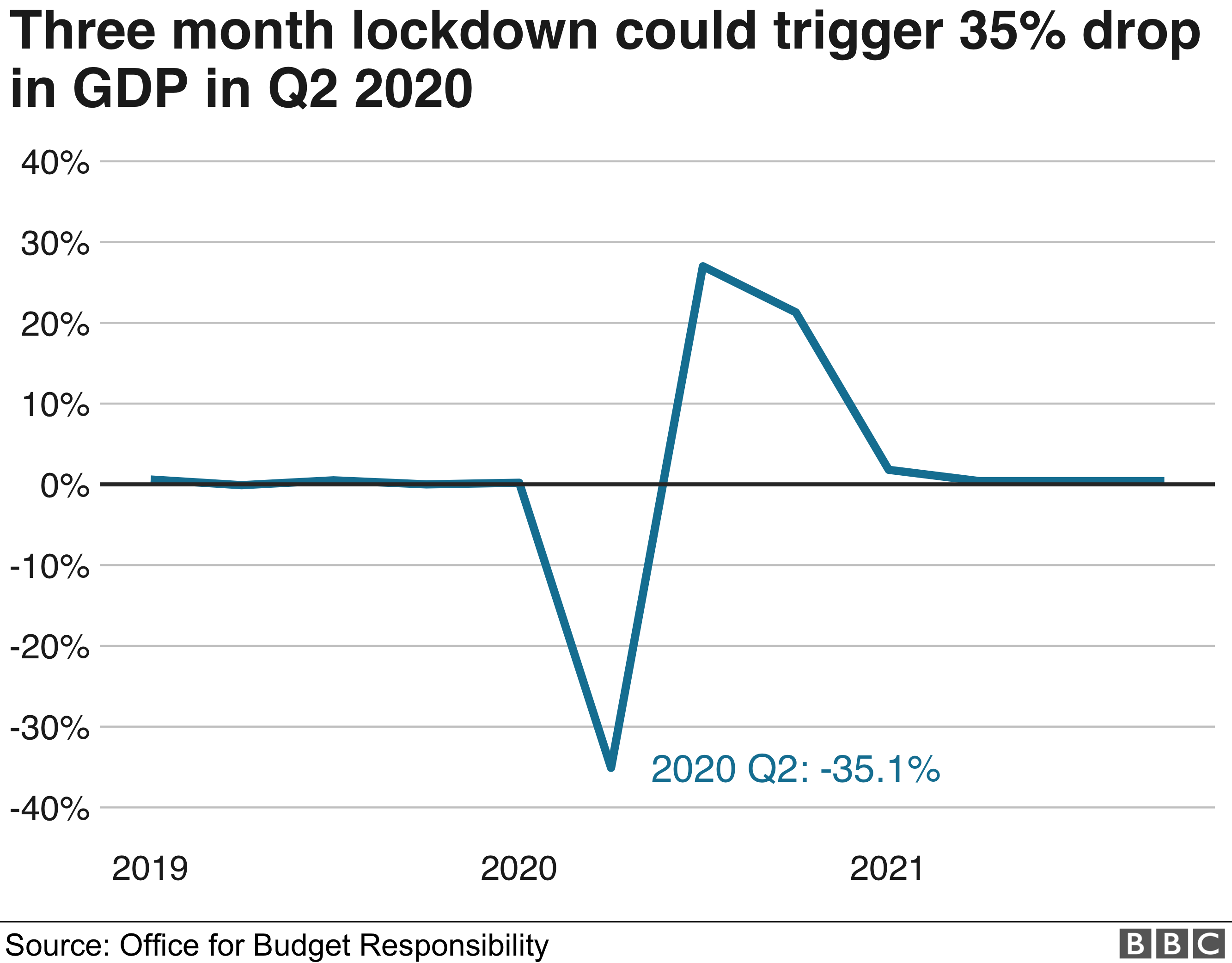
Many businesses have had to close with hundreds of thousands unable to work. While the UK government has produced unprecedented loan and pay schemes to keep companies in business and workers on the payroll, it is unavoidable that numerous people will become unemployed and many businesses may never open again.
A feature of the last decade has been the rise of self-employment, including gig economy workers. About 15% of workers now work for themselves, most of them operating alone. Many earn little and lack access to the traditional safety net, including sick pay and the national minimum wage. The self-employed have suffered more than the employees in terms of real income losses2.
The lockdown is having the biggest impact on the young, low-paid and female workers, according to a recent research from the Institute for Fiscal Studies3.
Many low-income households will struggle to make ends meet. Citizens Advice – a charity which provides guidance on jobs, welfare and debt management, had over two million website views in a week. The most viewed page being “Advice on what to do if you can’t pay your bills?”. 
After the lockdown is lifted, some businesses may snap back to how they used to operate before, but with changing habits it will create a demand for new products and services. For example, many may continue to work from home, whilst the delivery of goods and services online may see a sustained increase4.
The Chancellor, Rishi Sunak, has introduced schemes in which the state will pay 80% of the salary of the workers who would otherwise be laid off by their employers, up to £2,500 per month5.
It’s a difficult conundrum which not only the UK government but the rest of the world will try to address over the coming months and years.
READ MY NEXT BLOG – POST PANDEMIC BRITAIN – Effect of Pandemic on Mental & Physical Health
References
- https://obr.uk
- Bloomberg – https://www.bloomberg.com/news/articles/2020-04-06/how-low-u-k-unemployment-masked-holes-exposed-by-virus-pandemic
- https://www.bloomberg.com/news/articles/2020-04-05/u-k-lockdown-hits-young-low-paid-and-women-most-study-finds
- https://www.techuk.org/insights/opinions/item/17224-covid-19-what-does-it-mean-for-the-economy
- https://www.ft.com/content/973dc0c0-6ae4-11ea-800d-da70cff6e4d3
2050 – Dementia in India
12 million people with Dementia by 2050 in India A report published in The Hindu quotes a three-fold rise in people suffering from dementia in India. It will present an overwhelming financial and human burden to health and care systems.
I wonder where are the Care systems, who educates and takes interest in the Carers?

Dementia – Awareness in India
Dementia in India We need to educate ourselves about the terms Dementia, Alzheimer’s disease if we are to look after our loved one’s who will grow old and one day develop signs and symptoms of dementia. It’s sad to read that almost a quarter of Indians surveyed by the Alzheimer’s Disease International (ADI) considered that those suffering from dementia to be “dangerous ” and about three fourths felt that those with dementia are “impulsive and unpredictable”.

Rubbish on the streets
This is my second post on street rubbish.
What are the types of people who throw rubbish on the street?
My hunch is- lazy people
Educated/ uneducated of varying age groups who are in a rush!!
This poster in India made me wonder, can this act as a deterrent?

Dementia – Risk reduction of cognitive decline
The WHO has released new guidelines for risk reduction of cognitive decline in dementia.
Dementia is a rapidly growing public health problem with around 50 million people suffering from the condition. Approximately 60% of these people are living in low and middle income countries.
While age is the strongest known risk factor for cognitive decline, dementia is not a natural or inevitable consequence of ageing. Several recent studies have shown a relationship between the development of cognitive impairment and dementia with lifestyle- related risk factors, such as
- physical inactivity,
- tobacco use,
- unhealthy diets and
- harmful use of alcohol.
Certain medical conditions are associated with an increased risk of developing dementia, including hypertension, diabetes, hypercholesterolemia, obesityand depression. Other potentially modifiable risk factors include social isolation and cognitive inactivity.The existence of potentially modifiable risk factors means that prevention of dementia is possible through a public health approach, including the implementation of key interventions that delay or slow cognitive decline or dementia.
It is worth a read and acting on these recommendations and prevent a rapid decline due to this tragic condition.
Cigarette butts and plant growth
It’s usual to see cigarette butts strewn on the roads on daily walks!! People either throw it out of the car or crush it on their walks. But the impact it has on plant growth is enormous.
A study carried out by Anglia Ruskin University found that the presence of cigarette butts in the soil reduced the germination success and shoot length of clover by 27%.
Most cigarette butts contain a filter made of cellulose acetate fibre which causes damage the plants, even without the additional toxins released from the burning of the tobacco.
An estimated 4.5 trillion cigarette butts are littered worldwide each year making them the planet’s worst plastic pollution!!
Let’s do something about it.

 Bakul Kumar